


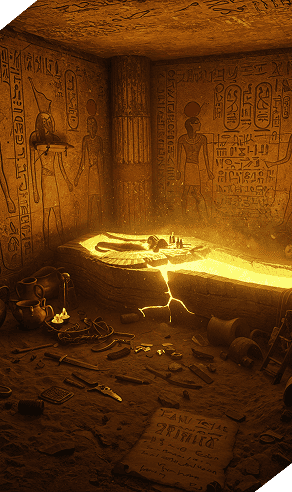

03 Get Locked In Escape Room
Once youre ready, step into a fully immersive world filled with clues, puzzles, and hidden secrets. The countdown begins the moment the door closes.

🔑 The Beginner’s Guide to Cracking Your First Escape Room Puzzle
The key to escaping your first room isn’t frantic searching; it’s adopting a strategic mindset and learning how to interpret the environmental clues the creators left for you. Start by understanding that nothing is random. Every object, symbol, color, and piece of paper exists for a reason, even if it’s just to distract you. Your primary goal is to shift from “seeing” objects to “reading” the room like a puzzle-filled book. The most common pitfall for beginners is failing to connect a clue (like a sequence of colored lights) to its corresponding lock (a padlock with colored buttons). When you find a clue, immediately ask: “What does this operate?” or “What does this open?”


🧩 Core Strategies for the First 15 Minutes
The initial moments are critical for setting up a successful game. First, triage the room: the entire team should perform a fast, thorough search and vocalize everything found. Don’t hide clues in your pocket! Shout out the information: “Red book on the shelf!,” “Four-digit keypad on the safe!,” and “Loose floorboard by the door!” This creates a collective inventory of assets. Once the initial search is done, group similar items. Put all the cipher sheets in one spot, all the keys in another, and all the objects that don’t immediately seem like clues (like a rubber duck or a toy car) in a designated “holding area.” This organization helps you avoid wasting time looking for a clue you’ve already found.
💡 Understanding Clue Mechanics
Most escape room puzzles fall into three core categories: Cipher/Code, Physical/Mechanical, and Observation.
- Cipher/Code Puzzles involve translating one piece of information into another. This often means finding a key (a sheet of paper showing A=1, B=2, etc.) and applying it to a locked message. Look for numbers, letters, symbols, or strange alignments. If a code is ten digits long, you know you need ten pieces of information to open it.
- Physical/Mechanical Puzzles require manipulation. These include putting a weight on a scale, fitting oddly shaped objects into a recess, or completing a circuit. For these, focus on shape and weight.
- Observation Puzzles are the trickiest. They force you to look at the room itself for the solution. This could be counting the number of stripes on the wallpaper, noting the names on pictures hung on the wall, or seeing a subtle smudge on the glass of a picture frame that reveals a hidden number. Color is the biggest clue here; if you find a clue written in blue, look for something blue in the room to apply it to.
If you get stuck, the most important rule is to ask for a hint. The game master is there to ensure you have fun, not to let you stand around frustrated for 20 minutes. A well-timed hint is a sign of a smart player who prioritizes progress over pride.


Mystery Tips
Unlock adventures through immersive, mind-bending escape experiences.

01Observe Everything
02Communicate Clearly
03Organize Clues
04Search Thoroughly
05Don’t Overthink
06Follow the Storyline
07Identify Locks & Codes
08Revisit Unsolved Elements
09Ask for a Hint